Key takeaways
- Choose FCL versus LCL from cargo volume, handling sensitivity and service scope.
- Plan packing and restraint for transport forces, not warehouse storage.
- For packed ocean containers, verify gross mass under the applicable SOLAS process.
- Define origin, customs, terminal and destination responsibilities before booking.
Choose FCL or LCL
FCL gives one shipper use of the container; LCL consolidates smaller shipments with other cargo. LCL can reduce the need to pay for unused container space, while FCL can reduce consolidation/deconsolidation handling. Compare actual service scope rather than using a fixed volume cutoff as a universal rule.
Prepare the cargo and container
-
Inventory the cargoList every commodity, piece, gross weight, dimensions and special handling need.
-
Select packagingUse pallets, crates, blocking or other packaging appropriate to the cargo and route.
-
Plan weight distributionAvoid concentrated loads and unbalanced placement that can affect safe handling.
-
Secure the cargoUse suitable restraint so cargo cannot shift during trucking, terminal handling or vessel motion.
-
Close and seal as requiredFollow the carrier/terminal process for sealing and documentation.
Cargo and container plan defined?
Use the actual cargo, equipment and origin/destination scope to check container freight options.
Check Container Freight OptionsUse the CTU Code as a packing reference
The IMO/ILO/UNECE CTU Code covers packing and securing cargo transport units across sea and land transport. It addresses planning, load distribution, securing, dangerous goods and other practical safety issues. It is a better reference than a generic "fill the empty space" approach.
Confirm verified gross mass for ocean vessel loading
IMO states that the shipper is responsible for providing verified gross mass for a packed container under SOLAS rules. VGM can be obtained by weighing the packed container or, where the competent authority permits, by weighing cargo/packages plus pallets, dunnage and securing material and adding the container tare mass. A packed container without the required VGM cannot be loaded under the rule.
Use the carrier/terminal and competent-authority process for the actual shipment. Do not substitute an informal estimate.
Build the booking around handoffs
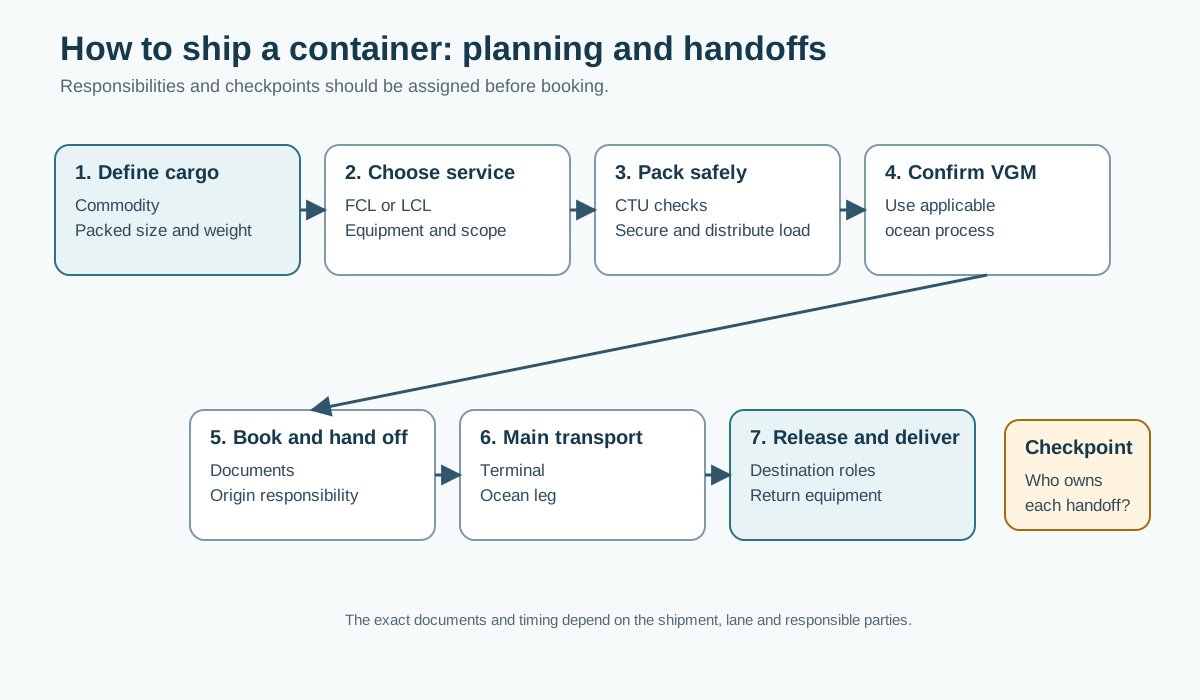
| Handoff | Confirm before booking |
|---|---|
| Origin | Container positioning, loading access and pickup date |
| Export/customs | Who prepares declarations and commercial documents |
| Terminal | Cutoff, VGM submission and receiving rules |
| Ocean transport | Container/service type and booked routing |
| Destination | Release, customs/import, drayage and unloading |
| Equipment return | Empty return location/time and responsibility |
Ready to request a container quote?
Send the cargo, equipment, lane and handoff responsibilities so a provider can price the actual move.
Get a Freight Shipping QuoteFinal container checklist
- Cargo can legally and safely be transported in the chosen service.
- Packed dimensions/weights and commodity descriptions are accurate.
- FCL/LCL and equipment type are confirmed.
- Packing/securing and VGM responsibilities are assigned.
- Customs/border documentation roles are assigned.
- Destination unloading and equipment-return plan is workable.