Key takeaways
- Translate "half a container" into actual cubic volume, weight and pallet/crate count.
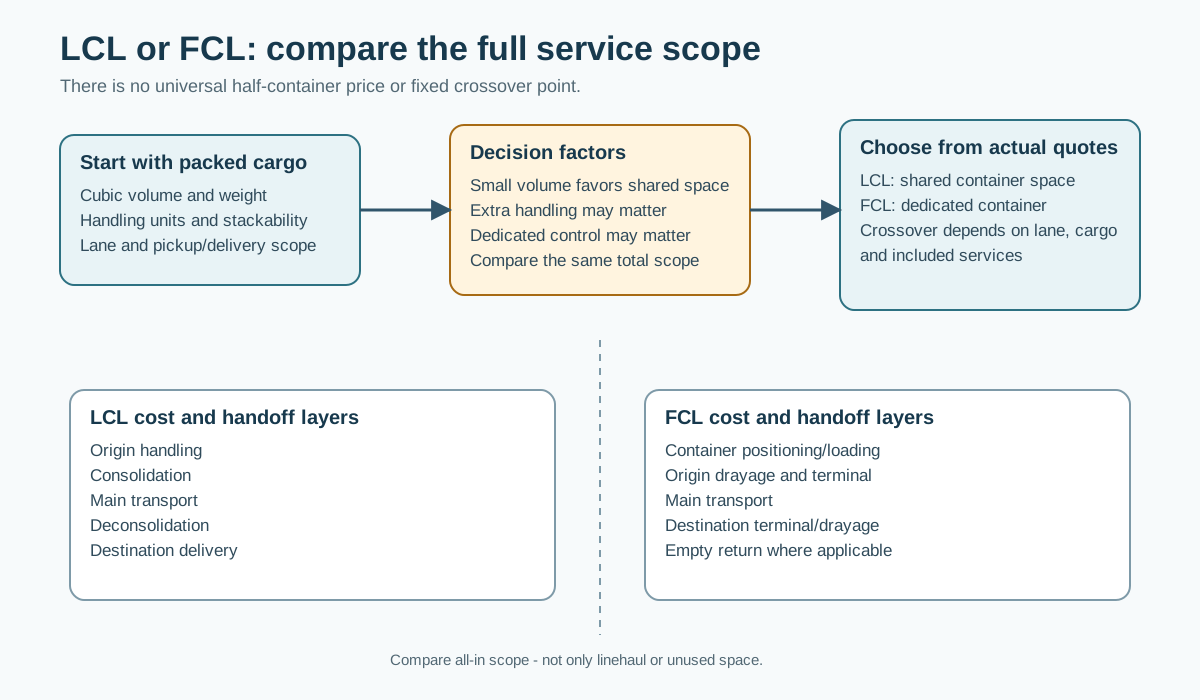
- Compare LCL and FCL on total door/terminal scope, not only ocean linehaul.
- LCL adds consolidation and deconsolidation handoffs that can matter for fragile or non-stackable cargo.
- FCL can become rational before a container is physically full, depending on lane, cargo and service scope.
What "half a container" usually means
Ocean providers generally sell FCL and LCL services rather than a literal 50 percent container product. Maersk describes LCL as shared container space for cargo that does not fill a full container, while FCL means one shipper occupies the container.
List each packed piece in metres or centimetres and calculate total cubic volume. "Half" is too imprecise for a defensible quote.
Why LCL is not half of FCL pricing
| Cost layer | LCL | FCL |
|---|---|---|
| Main transport | Shared container space | Dedicated container |
| Origin work | Receipt, consolidation and handling can apply | Container positioning/loading and terminal handling can apply |
| Destination work | Deconsolidation and release can apply | Container release, drayage and unloading can apply |
| Inland legs | Pickup/delivery priced to actual scope | Drayage/trucking priced to actual scope |
LCL is often attractive for smaller cargo, but it adds handling steps. FCL may provide more control and fewer consolidation touches. The threshold where one becomes better is lane-specific and cargo-specific.
Know whether you need LCL or FCL?
Use the same measured cargo and service scope to compare container freight options.
Check Container Freight OptionsMeasure the cargo the way the service will handle it
- Packed cubic metres, not room volume or an estimate from unpacked items.
- Gross weight and the weight of individual handling units.
- Stackable versus non-stackable status.
- Crates, pallets or loose cartons and whether special lifting is needed.
- Commodity, declared value and any restricted or dangerous characteristics.
Check the origin and destination handoffs
An LCL quote can involve a container freight station or consolidator at both ends. A low ocean component can be offset by terminal, documentation, consolidation, deconsolidation or delivery charges if they were not included in the comparison. Ask every provider to identify which legs are included and which are conditional.
When paying for a full container can still make sense
- The cargo is close enough to full-container economics on the actual lane.
- The shipment is fragile, non-stackable or sensitive to extra handling.
- The shipper needs dedicated equipment control.
- The pickup or destination plan already requires container handling.
- The provider quote shows lower all-in complexity despite unused space.
Prepare a clean LCL versus FCL quote request
-
Measure packed cargoRecord piece count, dimensions, gross weight and total cubic volume.
-
Define the laneGive exact origin and destination points, not just countries.
-
Define service scopeState pickup, terminal, customs and delivery responsibilities.
-
Ask for both optionsWhere feasible, request LCL and FCL under the same service scope.
-
Compare exclusionsCheck handling, storage, accessorial and event-driven charges before choosing.
Your container request is ready to price
Piece count, cube, weight, lane and handoffs are enough to request real options without guessing a half-container rate.
Get a Freight Shipping Quote