Key takeaways
- A carrier transports; a broker arranges; a forwarder can consolidate and assume transportation responsibility.
- The same shipment may involve more than one role.
- Verify operating authority and service scope instead of relying on marketing labels.
The three roles are not interchangeable
| Role | Core function | Typical shipper need |
|---|---|---|
| Motor carrier | Transports property with commercial motor vehicles | Direct truck capacity and equipment |
| Broker | Arranges motor-carrier transportation | Carrier sourcing and coordination |
| Freight forwarder | Assembles or consolidates and provides transportation | Multimodal or consolidated shipment management |
Why the distinction matters in a quote
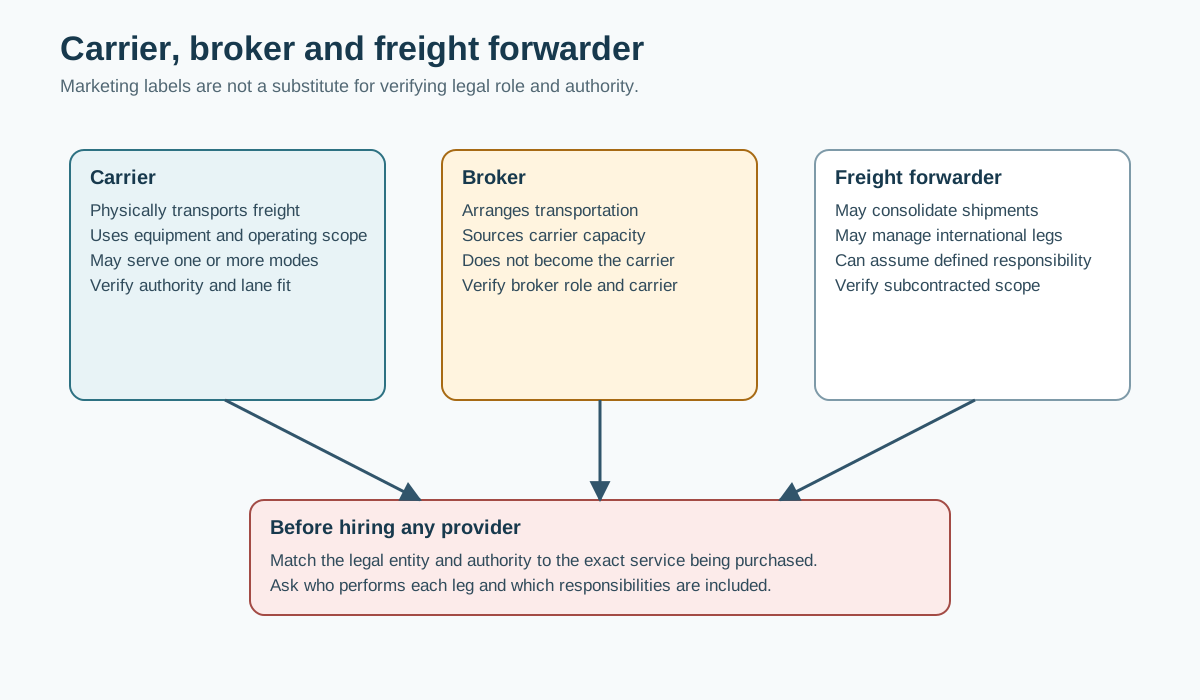
Provider selection changes the questions you should ask. With a carrier, service area, equipment and operating authority are central. With a broker, ask how capacity is sourced and how the carrier is identified. With a forwarder, ask which legs are subcontracted and which documentation and consolidation steps are included.
Verify the business you are hiring
The company name on a website is not enough to establish transportation authority. Match the legal entity and authority type to the service being offered, especially when a provider markets several logistics services under one brand.
Ready to compare freight options?
Use the shipment details from this guide to compare provider options on the same service scope.
Check Freight Shipping OptionsUse the role to narrow the market
Once the required role is clear, compare providers on lane fit, commodity restrictions, communication, accessorial handling and the scope included in the rate. That is more useful than ranking companies that solve different problems.
Use the authority type as a verification shortcut
The authority type can tell you which follow-up questions matter. A motor carrier should be able to identify the equipment and operating scope used for the shipment. A broker should be able to identify the arranging role and actual carrier before transport. A forwarder should explain consolidation, subcontracted legs and where it assumes transportation responsibility.
A logistics company may market several services. Verify the legal entity and authority connected to the exact service being purchased.