Key takeaways
- Compare air and ocean only after defining the same door/terminal scope.
- Australian biosecurity is part of the shipping plan, not an afterthought.
- Timber packaging, container cleanliness and commodity conditions can affect clearance work.
- A quote should identify which customs, inspection, treatment and local-delivery costs are included or excluded.
Build the cost stack from origin to final delivery
| Stage | Typical cost questions |
|---|---|
| U.S. origin | Pickup, export warehouse, packing, terminal delivery, documentation |
| International transport | Air chargeable weight or ocean FCL/LCL service and current lane charges |
| Australian arrival | Terminal/airport handling, customs entry and broker activity |
| Biosecurity | Documentation, inspection or treatment when required by the cargo/container |
| Final delivery | Metro/regional delivery, appointments, equipment and access conditions |
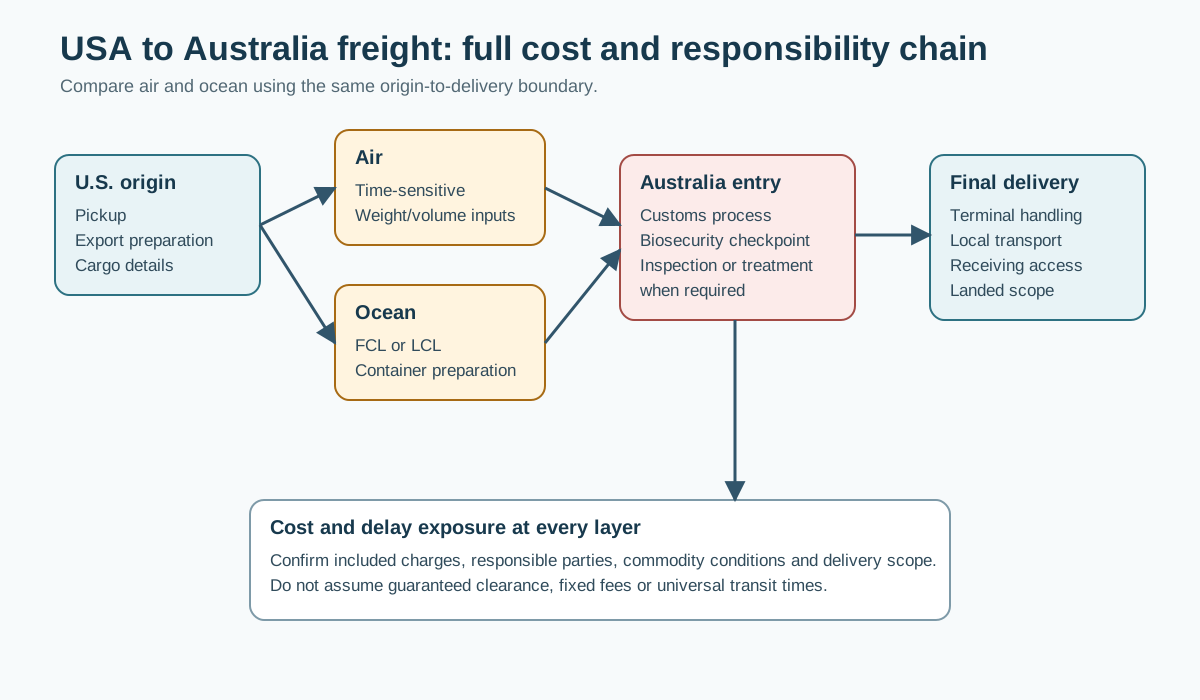
Choose air or ocean based on the shipment task
Air freight tends to make sense when time, cargo value or inventory urgency outweighs the higher transport cost. Ocean FCL or LCL is usually the containerized choice when transit speed is less important and volume is larger. The correct comparison uses actual packed weight/volume and the same origin/destination service scope.
Australia biosecurity can change the landed cost
Australia's Department of Agriculture, Fisheries and Forestry tells importers to check BICON for commodity-specific import conditions before shipping. Container cleanliness, timber packaging and biosecurity documentation can affect release. Goods or containers that need inspection or treatment can incur delay and cost.
A general freight quote cannot tell you whether a particular food, plant, animal, timber, used machinery or other regulated item meets Australian import conditions. Use BICON and the importer/broker for the actual commodity.
Have the cargo and Australia delivery scope?
Use the same mode, cargo and arrival requirements to check current freight options.
Check Freight Shipping OptionsKeep the export and import roles clear
On the U.S. side, export-control and export-filing obligations depend on the commodity, value, destination and licensing status. BIS publishes the current Export Administration Regulations, while U.S. export classification uses Schedule B/AES processes where applicable. In Australia, customs import declarations and biosecurity requirements sit with the arrival-side process.
- Exporter/shipper: accurate commodity, value, quantity and export-control information.
- Forwarder/carrier: transport booking, cargo acceptance and transport documentation within its role.
- Australian importer/broker: import declaration, tariff/tax and biosecurity coordination as applicable.
Container-specific cost traps for Australia
For ocean containers, dirty exterior/interior surfaces, soil or plant material, untreated timber packaging and incomplete packing declarations can create clearance work. DAFF specifically advises cleaning containers and meeting timber/packaging requirements before shipment. This is operationally different from a generic international cost page because Australia applies a strong biosecurity clearance layer.
Make the quote comparable
-
Define the cargoCommodity, value, packed dimensions/weight, packaging and any biosecurity-sensitive materials.
-
Define the mode candidatesAir, LCL or FCL based on actual volume and urgency.
-
Define the Australian endpointPort/airport plus final delivery location and access.
-
Confirm compliance ownershipIdentify who handles export filing, customs entry and biosecurity documents.
-
Request inclusions/exclusionsAsk for transport, terminal, customs/broker and inland legs to be separated.
Ready to price the full USA-to-Australia move?
Request a quote with export, transport, arrival and final-delivery responsibilities clearly defined.
Get a Freight Shipping Quote